AGV – AUTOMATING WAREHOUSE MANAGEMENT & INTERNAL TRANSPORT

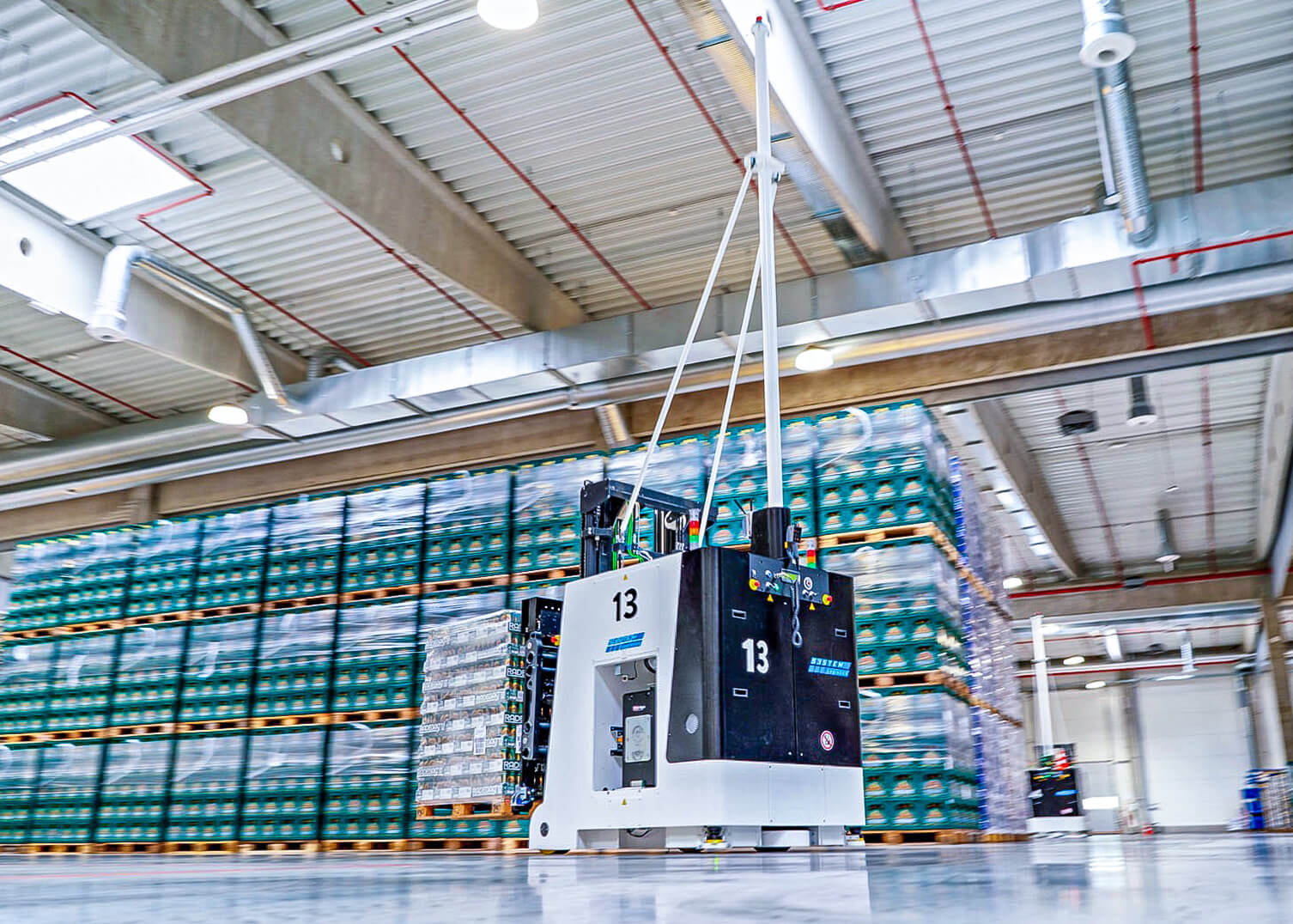
Driverless transport systems (AGVs) handle storage in block storage, supply and dispose of production and operate transfer stations for order picking – 24/7, safely and predictably.

We design vehicle types, routes, stations and IT to suit your processes, environmental conditions and performance requirements.


ADVANTAGES AT A GLANCE
  • Pallet weights up to 4,500 kg
  • Multi-pallet handling
  • Lifting heights up to 10 m
  • Block storage

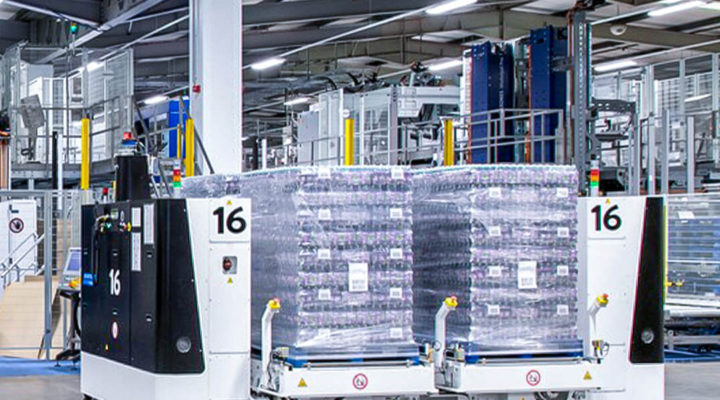
Fahrerloses Transportsystem (AGV) von System Logistics transportiert eine Palette mit Getränkekisten

AREAS OF APPLICATION

Zwei Fahrerlose Transportsysteme (FTS/ AGV) von System Logistics mit einem Gabelstapler

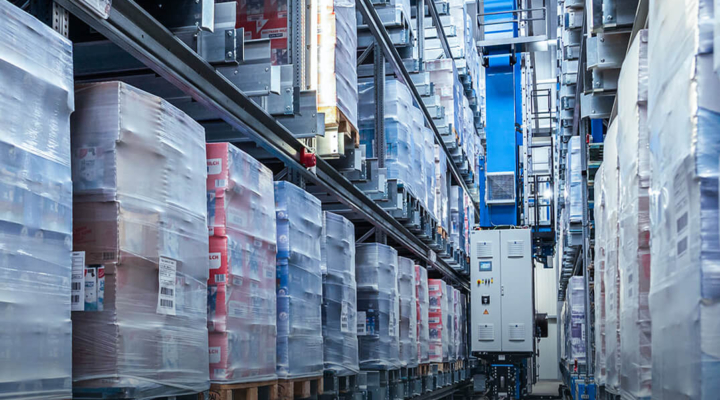
BLOCK STORAGE / WAREHOUSING

Mit Getränkepaletten beladenes AGV Quad von System Logistics

PRODUCTION SUPPLY / DISPOSAL

Hydraulischer Greifarm setzt Getränke auf Palette eines AGV

ORDER PICKING

VEHICLE TYPES & BODIES

Zwei Fahrerlose Transportsysteme (AGVs) von System Logistics mit doppelter Gabelstapler Funktion

COUNTERBALANCE

Counterbalance forklift truck with lift heights of up to 9 m and handling of 1 to 2 pallets up to 2,000 kg

Zwei Fahrerlose Transportsysteme (AGVs) von System Logistics mit Gabelstapler Funktion

LIGHT

Automated pallet truck with weights up to 1,200 kg and lifting heights up to 1.2 m

Zwei Fahrerlose Transportsysteme (AGVs) von System Logistics

CONVEYOR DECK

AGV with roller conveyors for up to 4 pallets weighing 1,500 kg each

Zwei Fahrerlose Transportsysteme (AGVs) von System Logistics

SHARK

Flexible transport platform, can be equipped with roller/chain conveyors or lifting units for weights up to 1,200 kg

  • Laser navigation: reflectors on walls/columns as reference points; rotating 360° laser scanner in the vehicle determines position; onboard computer controls AGV along defined route
  • QR code navigation: Floor labels with position codes; barcode sensor (PGV) under the vehicle reads markers as it passes over them; suitable for limited visibility or reflector shading
  • Hybrid navigation: Combination of two or more variants for high accuracy and redundancy; stable even in changing environmental conditions or during modifications
  • Battery management: System for maximising fleet performance and minimising downtime; design
    depends on number of AGVs, application and layout.
  • Battery types: Pure lead XFC – maintenance-free, constant performance, long service life, low outgassing. Lithium (Li-FePO₄ / Li-NiCoMn) – fast charging, energy efficient, emission-free
  • Charging concepts: Automatic charger – battery replacement in automatic mode (≈2 min), recommended for pure lead systems. Opportunity charging – permanently installed charging stations, no battery replacement necessary, recommended for lithium systems.
  • Standard: PLS, optical sensors, emergency stop, optical/acoustic signals
  • Additional equipment: LMS, Blue Spot, side safety scanners
  • Standards: Implementation in accordance with applicable safety requirements; specific standards are taken into account on a project-specific basis
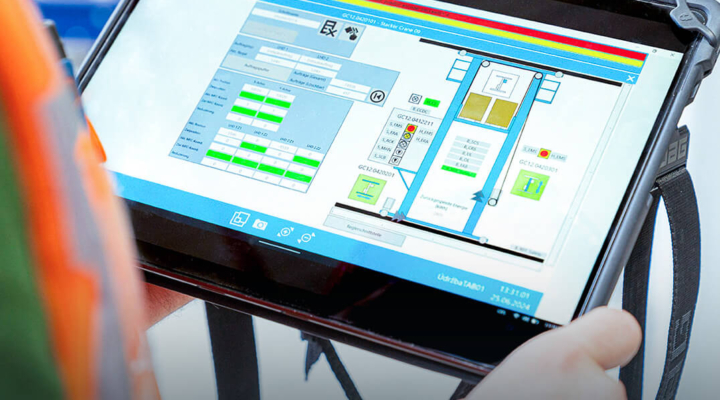
  • Fleet management / visualisation: central control, routing, order and fault management, realtime visualisation of vehicle status and positions
  • Integration: traffic light control, SLT, Andon systems, external signals
  • VDA 5050: standardised communication between master control and AGV
  • Traceability: event/error logs
  • Addressing the shortage of skilled workers: fewer forklift trips, predictable shifts
  • Reducing OPEX: fewer empty runs, optimised routes, less damage
  • Scaling instead of rebuilding: add to the fleet when throughput increases

PROJECT EXAMPLE

Radegast brewery production plant in Nosovice with automated AGV block storage from System Logistics

Beverages

RADEGAST

Automatic block storage using AGVs

GOAL: Automation of a block storage facility in a new building
RESULT: Project duration 18 months, automatic block storage using AGVs up to 4 levels high and connection to order picking, rear and side loading
REQUEST ANALYSIS
MORE ABOUT THE REFERENCE “RADEGAST”

FREQUENTLY ASKED QUESTIONS (FAQ)

Yes – with clearly defined corridors, unambiguous transfer positions and coordinated fleet logic. Route planning takes bottlenecks and encounter restrictions into account.

Flatness, load-bearing capacity and defined gradients. We check this in a feasibility test and plan any necessary adjustments/markings.

As we focus on the handling of large-volume goods, personal and process safety are crucial factors. Our smart concepts therefore aim to avoid mixed traffic in daily operations. Where this is not possible in certain areas, safety zones, speed profiles, acoustic/optical signals and clear traffic rules serve as additional safety measures.

Our vehicles are equipped with control logic and safety technology. The vehicles are orchestrated via comprehensive fleet and transport management. Order management is handled by the WCS/EWM to be connected. This visualises vehicle statuses, their locations and transport orders for the user.

The charging strategy depends on throughput, operating conditions and operating times. For this reason, we offer different battery concepts depending on the application.

Flat, load-bearing floors, clearly defined traffic areas and stable IT and communication structures are required for the reliable operation of AGV systems. Temperature ranges and space conditions at racks and transfer stations must also be taken into account.

NEXT STEPS?

Clarify the problem together

Take stock

Concept ideas

Budget price including ROI analysis

AUTOMATED MATERIAL FLOW CONTROL

Intelligent systems for efficient, safe and scalable material movements. Together, we clarify all the details for stable 24/7 operation.

FURTHER INTRALOGISTICS SOLUTIONS