SOFTWARE & INTERFACES – WMS, SAP.EWM & VISUALISATION
Smart software solutions form the basis for efficient logistics processes.
To meet these requirements, we focus on our customers’ core processes and how we can continuously improve them when developing our digital products.
Due to the mostly existing and extensive IT landscapes, seamless integration and flexible connection of subsystems is another factor for a positive project outcome.
Based on a proven standard modular system and the many years of experience of our software experts, we are able to respond to customer specifications individually and implement them reliably.
ADVANTAGES AT A GLANCE
MODULES AT A GLANCE
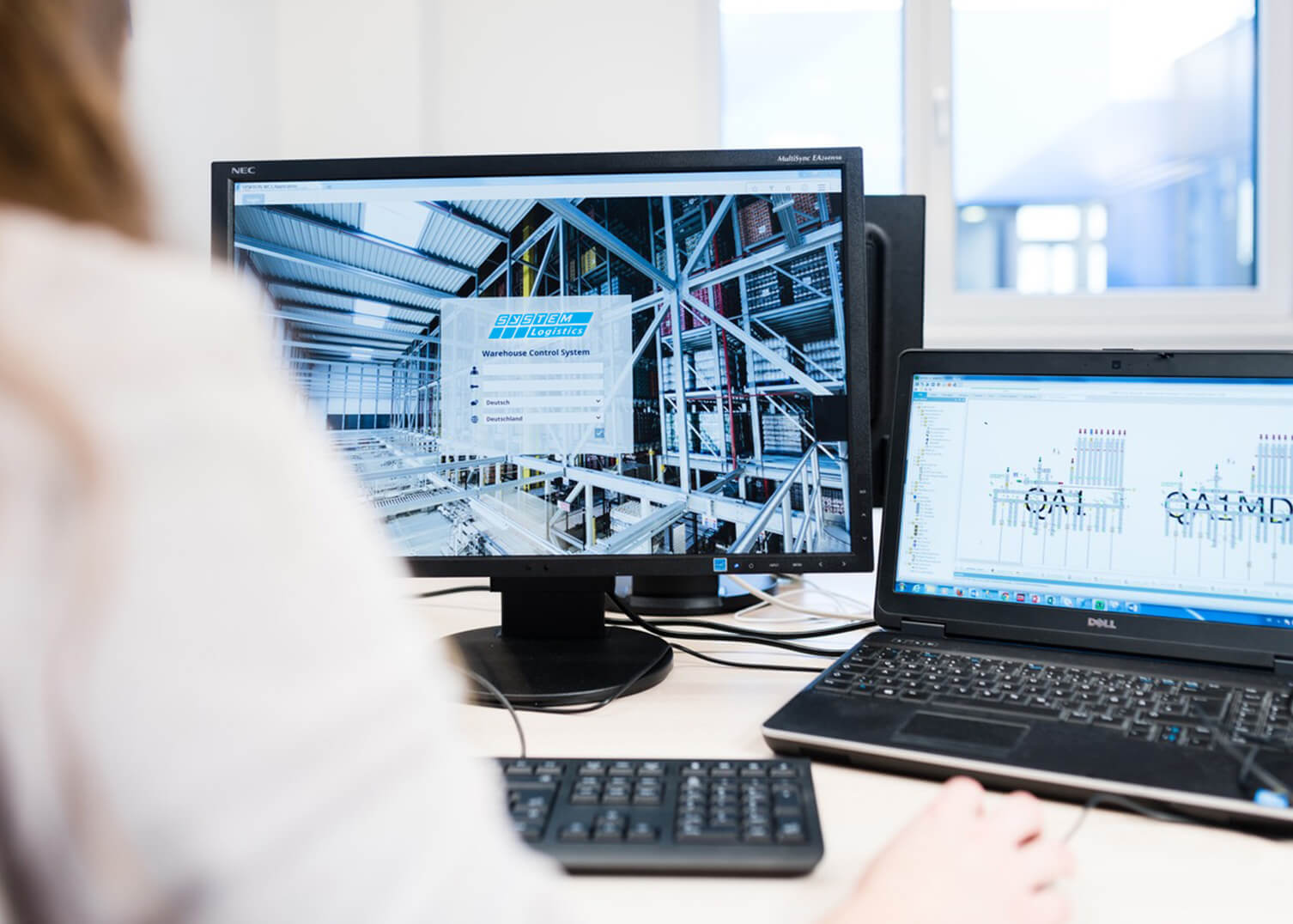
The System Logistics Software Suite consists of several systems and modules that are geared towards our core business as a system integrator. At its heart is the Warehouse Control System (WCS), consisting of the WMS and MFC modules. It covers a large part of the supply chain in a factory and/or logistics centre.
WAREHOUSE MANAGEMENT SYSTEM
The Warehouse Management System (WMS) is the core of the suite. Its main task is to manage logistics and related processes. The WMS manages inventory and interfaces with other systems such as enterprise resource planning (ERP) systems, manufacturing execution systems (MES) and material flow computers (MFC). It also handles business orders such as replenishments, customer orders and goods receipts.
MATERIAL FLOW CONTROLLER
Material flow controllers (MFC) coordinate and optimise physical flows within a warehouse and production environment. As an intermediary, it controls communication between the warehouse management system (WMS) and the control technology (PLC). The MFC optimises transport routes using standardised strategies, depending on traffic and the availability of system components.
CONTROL TECHNOLOGY
Another central component of the Logistics Suite is the control technology (PLC). It interacts directly with the electrical components and ensures transport movements and safety. Together with the MFC, the PLC is directly responsible for the transport of goods in the warehouse. Our tailor-made solutions are based on proven standard components and modules. This enables us to guarantee efficient project planning and subsequent support.
HUMAN MACHINE INTERFACE
The next component of the Logistics Suite is a modern and intuitive human-machine interface (HMI) that facilitates the visualisation and operation of the machines. The HMI monitors, controls, executes commands and evaluates the electromechanical system. It offers functions such as plant visualisations and alarm displays. In the logistics application environment, the HMI is used to monitor plant activities. It also offers functionalities for the safe handling of errors and incidents during operation, as well as support functions for safe and efficient plant maintenance.
We are fast and flexible, enabling us to integrate seamlessly into any system landscape. Our standard interfaces to other systems such as ERP, MES, YMS, LMS and data warehouses enable smooth integration.
SAP – EXTENDED WAREHOUSE MANAGEMENT
As a solution provider for highly automated intralogistics systems, we also have more than ten years of experience in the field of SAP.EWM. We specialise in SAP.EWM-MFS – the machineoriented area where we can optimally apply our technical expertise.
Why? Because the SAP standard does not offer all the functions and optimisations required for complex, highly automated solutions. This is where we come in: we supplement the standard with tailor-made extensions and intelligent adaptations to ensure maximum efficiency and performance.
YOUR ADVANTAGES WITH THE SLG EWM MFS STANDARD
Our solution goes beyond the SAP standard and offers you maximum efficiency, transparency and performance for highly automated intralogistics systems.
Highlights:
FUNCTIONALITY FOR MAXIMUM EFFICIENCY
Our solution offers a clear architectural separation between MFS logic and EWM logic, as well as a powerful telegram interface for stable and fast communication.
Highlights of the SYSTEM LOGISTICS telegram interface
INTELLIGENT ROUTING AND STORAGE PROCESSES
VEHICLE CONTROL – EVERYTHING AT A GLANCE
TRANSPARENCY & ANALYSIS
FURTHER INFORMATION
WAREHOUSE CONTROL SYSTEM
With the System Logistics WCS, you can optimise your warehouse processes and thus increase your efficiency and productivity. The software solution offers you:
You receive a scalable solution that can be adapted to the individual requirements of your company.
The software is suitable for all warehouse sizes and can be adapted to different warehouse types and processes.
User interface
User management
Master data management
Warehouse, storage location and inventory management
Goods receipt
Goods issue
Preparation for dispatch
Dispatch notification
Replenishment
Automatic replenishment for picking
Manual warehouse
Journal
Inventory support
Statistics
Transport management
Routing
Transport routing including sequencing
Resource management
System Logistics PLC forms the basis of all automated solutions. It offers comprehensive functions and solutions for the automation of mechatronic components:
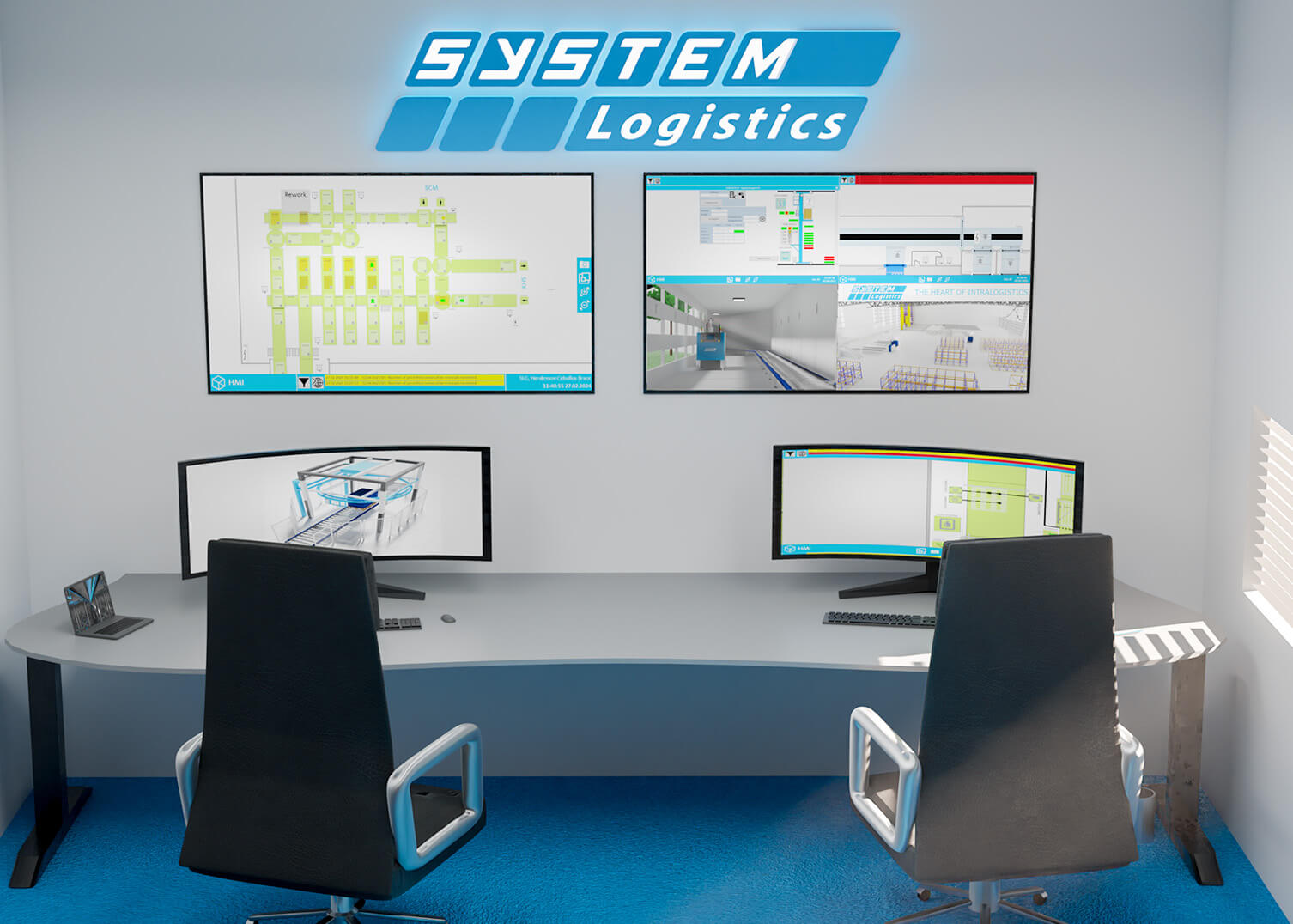
Our visualisation/HMI is the central tool for monitoring, controlling and operating the control system.
It is based on either:
And offers the following basic functionalities:
OPERATING CONCEPT
Processes in the field of conveyor technology and warehouse technology are carried out as fully automatically as possible. Nevertheless, interaction with the operator is necessary:
The SYSTEM LOGISTICS operating concept provides the following components for visualisation and operation:
Various control panels and control stations are available in the system itself for on-site operation of the system. Mobile devices are used as the interface between the user and the machine. In conjunction with the HMI, these offer optimal conditions for operating the system and querying operating statuses.
Communication takes place via WLAN TCP/IP. The function selected in the HMI is activated by buttons at the local control stations.

SYSTEM TOPOLOGY
Depending on the size and complexity of the system, the intralogistics system is divided into several group controllers (GC). These communicate via TCP/IP with a material flow computer (MFC), which controls the material flow using telegrams and serves as an interface to the higherlevel
system.
Each group control is further divided into operating areas (LAC). The individual operating areas are switched together in their operating mode and serve to logically structure the systems. The division into group controls and operating areas is based on material flow and control technology aspects in order to ensure the safe functioning of the system.
Each operating area continues to consist of elements that are responsible for operating the system, transporting the conveyed goods and monitoring conditions. A general distinction is made between conveyor technology components (CON) and devices (DEV). Conveyor technology components include roller conveyors, chain conveyors, lift tables, turntables, etc. Devices include lifts, transfer cars, storage and retrieval machines, and electric railways.
A group control system can consist of the following components:
WHY SYSTEM LOGISTICS SOFTWARE SUITE?
FUTURE-PROOF:
Thanks to the use of state-of-the-art software technologies, our warehouse control system is ready for future requirements and expansions
INTEGRATED:
Standardised interfaces ensure the best possible integration into existing systems such as ERP, MES or LIMS
USER-FRIENDLY:
The software impresses with its clear user guidance and reduced manual effort
TRANSPARENT:
Numerous control options with extensive on-board reporting, statistics and KPIs enable continuous monitoring and evaluation.
TIME-SAVING:
A virtual commissioning and test environment ensures a fast go-live and maximum quality
QUALITY ASSURANCE, TESTS & GO-LIVE
We are fully aware of our responsibility for the smooth operation of our customers’ businesses.
That is why we rely on a consistent, continuous testing procedure throughout the entire product and project life cycle.
This ranges from automated module testing to comprehensive testing of business processes using digital twins and covers all our software modules, including PLC software.
Intensive in-house quality control in collaboration with our customers begins with pure interface tests between the
systems and ends with a factory acceptance test lasting several weeks, during which all systems are interconnected and tested against the virtually mapped logistics system.
This not only ensures software quality, but also enables early training of customer personnel and promotes customer identification with the overall system.
SECURITY & COMPLIANCE
Our commitment to your cyber security
At SYSTEM LOGISTICS GMBH, security and trust are our top priorities. We meet the highest standards and legal requirements such as NIS2, the Cyber Resilience Act, the Data Act and the Radio Equipment Directive – in line with the guidelines of KRONES AG.
OUR MEASURES:
OUR GOAL:
Robust, trustworthy products and services that protect your data and ensure business continuity
– in close cooperation with KRONES AG.
PROJECT EXAMPLE
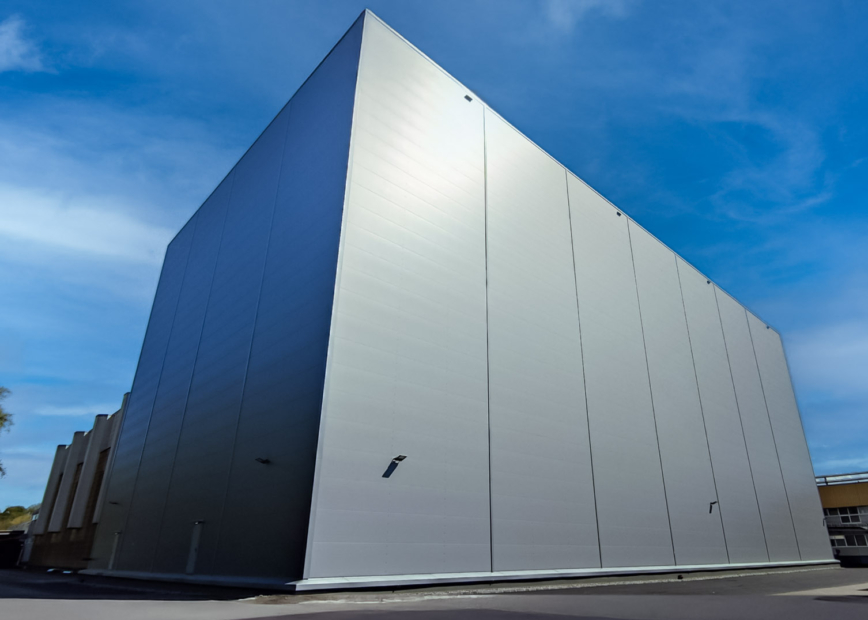
Food
SPITZ
Warehouse expansion and replacement of existing WMS from 1995
GOAL: A new WMS for the entire logistics system
RESULT: Project duration 14 months, expansion by 4 aisles / 13,000 storage locations and introduction of a central WMS without interrupting production
REQUEST ANALYSIS
MORE ABOUT THE REFERENCE “SPITZ”
FREQUENTLY ASKED QUESTIONS (FAQ)
Both – System Logistics WMS or SAP.EWM. It depends on the long-term, sometimes companywide, IT strategy. Depending on the objectives, both solutions can have advantages and disadvantages. A decision should be made in consultation with various stakeholders and specialist companies.
Seasonality and peak utilisation are common in many industries. The basis for this is always high availability of the overall systems. Our software solutions support this with fault-tolerant software strategies, smart buffer and sequence logic, and intensive quality assurance measures using functional and load tests via digital twins.
System integration begins with the IT landscape. To this end, we have created standard APIs that enable us to flexibly integrate other software solutions. This is based on a lean and clearly structured software concept and data model.
NEXT STEPS
IT THAT CONNECTS YOUR LOGISTICS
We optimise your system landscape and show you how ERP, MES and WMS can work together seamlessly.
FURTHER INTRALOGISTICS SOLUTIONS