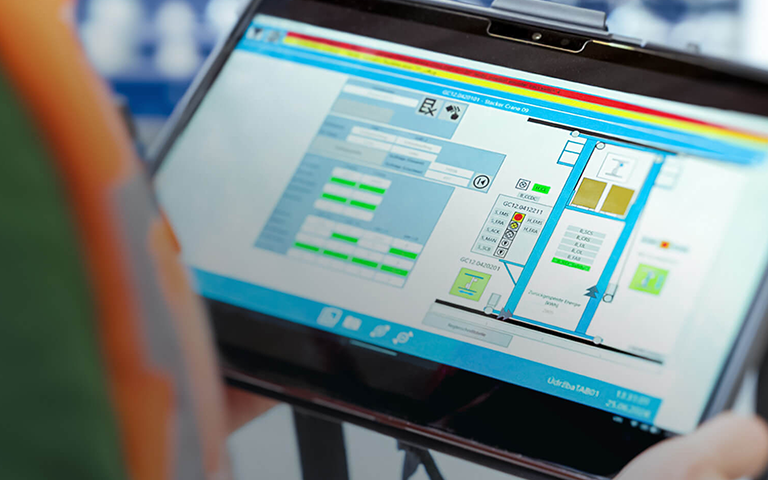
A Warehouse Management System (WMS) is the brain of the warehouse. It knows where goods are stored, manages storage and retrieval operations, and ensures that people and automated systems make the right decisions. Without an effective WMS, even the most advanced automation cannot reach its full potential. We explain what a WMS does and what matters when choosing the right solution.
What does a WMS do?
A Warehouse Management System manages inventory in real time and coordinates all warehouse movements: where goods are stored, in which sequence they are retrieved, and how orders are picked. It optimises transport routes, warehouse utilisation and operational strategies while connecting manual processes with automated technology. In short, the WMS brings individual components together to create a fully functioning warehouse.
Key functions
- Inventory management: Up-to-date visibility of stock quantities and storage locations at all times.
- Storage strategies: Putaway, replenishment and retrieval processes (FIFO, FEFO, etc.).
- Order picking control: Picking methods, sequencing and route optimisation.
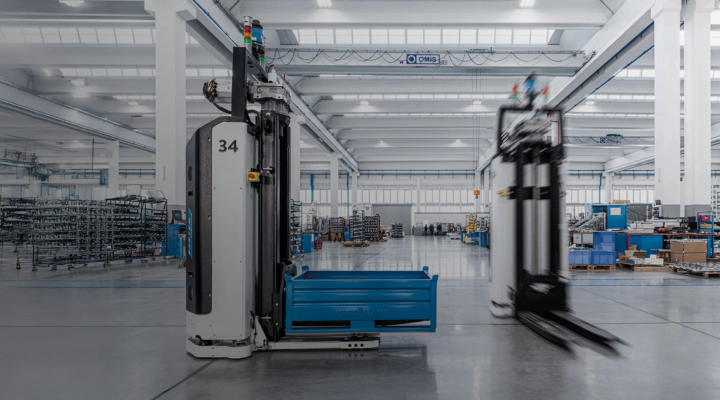
- Material flow control: Integration of conveyor technology, storage and retrieval machines, and automated guided vehicles (AGVs).
- Interfaces: Integration with ERP, MES, quality assurance systems, process control systems and BI tools.
WMS or SAP.EWM?
Companies using SAP face an important decision: a standalone WMS or SAP.EWM (Extended Warehouse Management). Both approaches are viable. The right choice depends on the IT strategy, existing system landscape, internal expertise and degree of automation. We explore this topic in more detail in our article “SAP.EWM or a standalone WMS suite”.
Why software determines success
Hardware stores and transports goods, but software is what turns these capabilities into performance. A well-configured WMS increases throughput, reduces errors and provides transparency across warehouse operations. Poor integration, on the other hand, can limit the performance of even the most advanced technology. That is why we treat software not as an add-on, but as a core element of every project.
Our approach
We start by understanding your processes and existing IT landscape, rather than focusing on a particular software product. As a system integrator, we ensure seamless integration of the WMS with ERP systems, automation technology and dispatch processes, whether through our own System Logistics Suite or SAP.EWM. What matters is that all components work together seamlessly.
Frequently Asked Questions (FAQ)
An ERP system manages company-wide processes such as orders, purchasing and finance, while a WMS manages warehouse operations, including inventory, transport routes and storage strategies. Both systems work together through interfaces.
In many cases, yes. Even in a manual warehouse, a WMS improves transparency, reduces errors and optimises warehouse utilisation. With increasing automation, it becomes essential.
Yes, through SAP.EWM. Whether this is more suitable than a standalone WMS suite depends on your IT strategy. We work with you to determine the right solution.
NEXT STEPS?
Discuss the software concept or schedule an initial consultation
FURTHER INFORMATION