Order picking is the most labour-intensive process in the warehouse – and often the stage where the highest error rates and costs occur. Which picking method is the right one depends on the product range, order structure and required throughput. We provide an overview of the most common methods and explain when automation becomes worthwhile.
Kennzahlen auf einen Blick:
The Two Basic Principles
Every order picking method can be assigned to one of two basic principles. With Person-to-Goods, the operator travels to the goods – traditionally by walking through shelving aisles, using a forklift truck or a picking cart. With Goods-to-Person, the goods are automatically transported to the workstation, for example from an automated storage system.
The first approach offers flexibility and a lower initial investment, while the second enables faster processes, improved ergonomics and lower error rates – and forms the basis for automation or is often the logical result of it.
Gängige Pick-Methoden
- Pick-by-Paper: Paper-based picking lists – simple, but comparatively slow and prone to errors.
- Pick-by-Light: Light displays guide the operator to the correct storage location – particularly efficient for high throughput and small items.
- Pick-by-Voice: Voice-guided picking keeps both hands and eyes free. It is particularly suitable for larger items and applications in cold and frozen environments.
- Pick-by-Vision: Smart glasses display picking information directly in the operator’s field of vision.
Auftragsbezogen oder gebündelt
- Single-Order Picking: One order is picked per picking cycle – simple, but inefficient when handling large numbers of small orders.
- Multi-Order Picking: Several orders are picked simultaneously – reducing travel distances and increasing productivity.
- Zone Picking: Operators are assigned to fixed picking zones – particularly suitable for large product ranges.
When Automation Becomes Worthwhile
As soon as order picking becomes a bottleneck – due to high throughput requirements, elevated error rates or labour shortages – switching to a Goods-to-Person concept can become worthwhile.
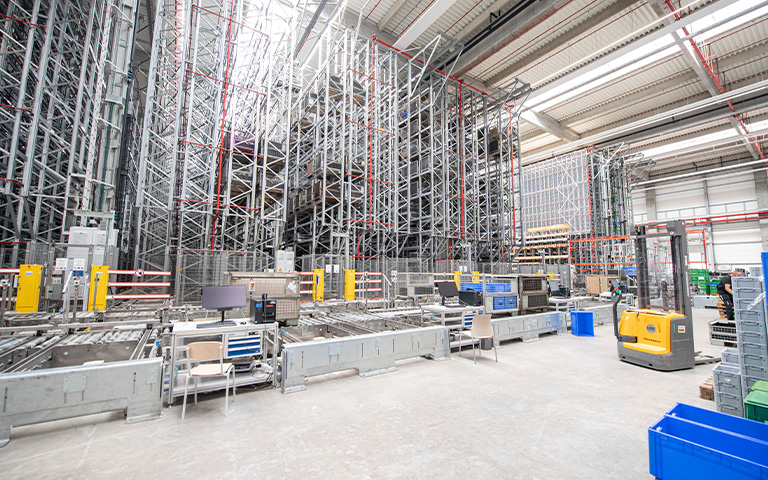
Automated storage systems deliver the required goods directly to ergonomic workstations. Automated case picking and mixed-pallet building can take over heavy and repetitive handling tasks, while operators remain responsible for process control and quality assurance.
Our Approach
There is no universal answer to which picking method is the right one – the answer lies in your order data. We analyse your order structure, product range and peak loads and work with you to develop the most suitable concept, from optimising manual processes through to full automation.
Our approach is manufacturer-independent and includes a transparent assessment of the expected return on investment.
Frequently Asked Questions (FAQ)
With Person-to-Goods, the operator travels to the goods. With Goods-to-Person, the goods are automatically delivered to the workstation. The latter enables faster processes, improved ergonomics and provides the basis for automation.
For high-throughput operations, Pick-by-Light and Goods-to-Person systems typically deliver the highest performance. Pick-by-Voice is particularly effective when hands-free operation is required. The best method, however, depends on the product range and order structure.
Often, yes – especially when error rates, ergonomic requirements or labour shortages become critical factors. We determine the break-even point based on your operational data.
Next Steps
Analyse Your Picking Operations or Book an Initial Consultation
Further Informationen

